Latch-X combines declarative modeling, AI assistance, visual design, and probabilistic engines — all in one unified platform.
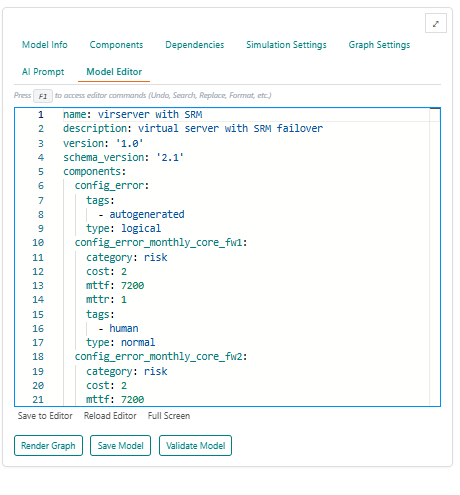
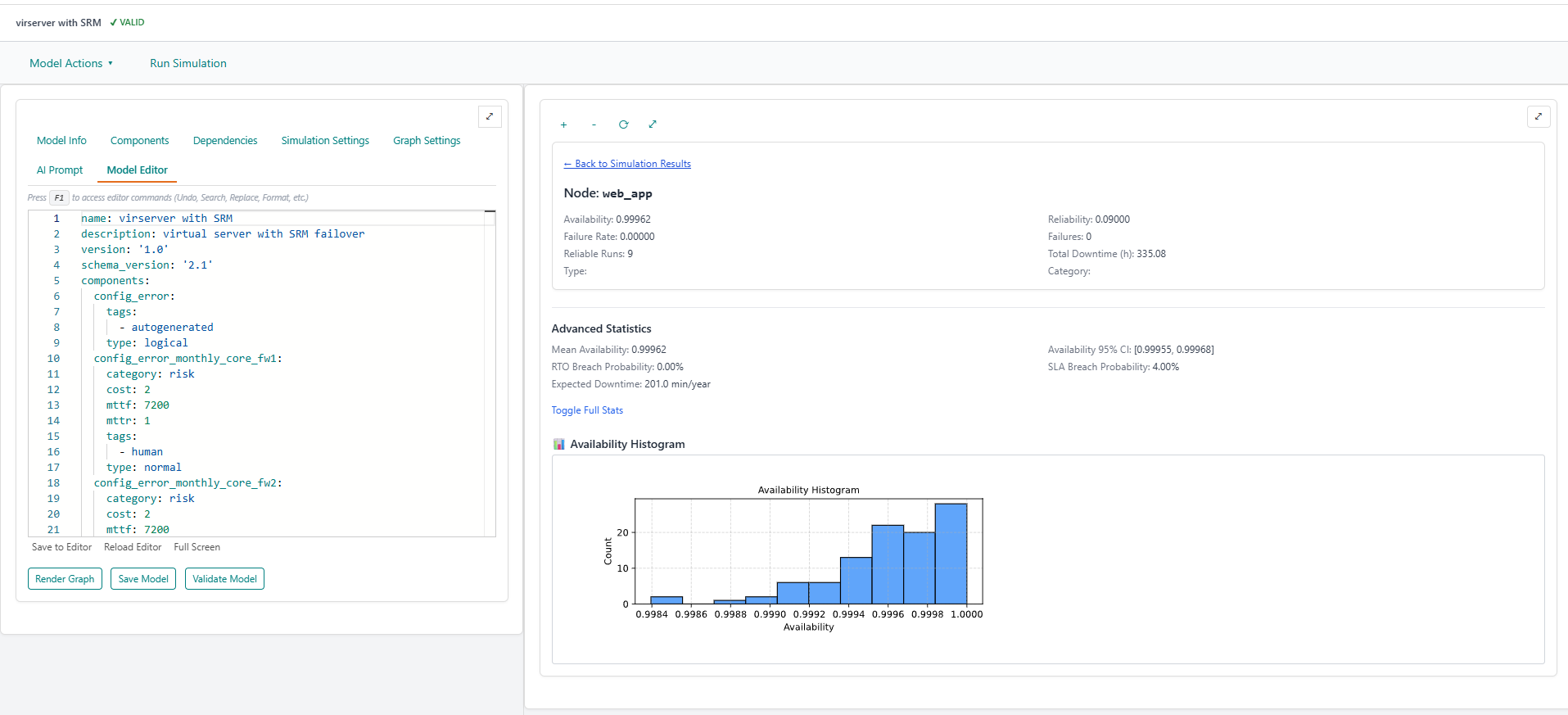
Define components, failure logic, risks, and repair behavior using a clean, human-readable YAML format.
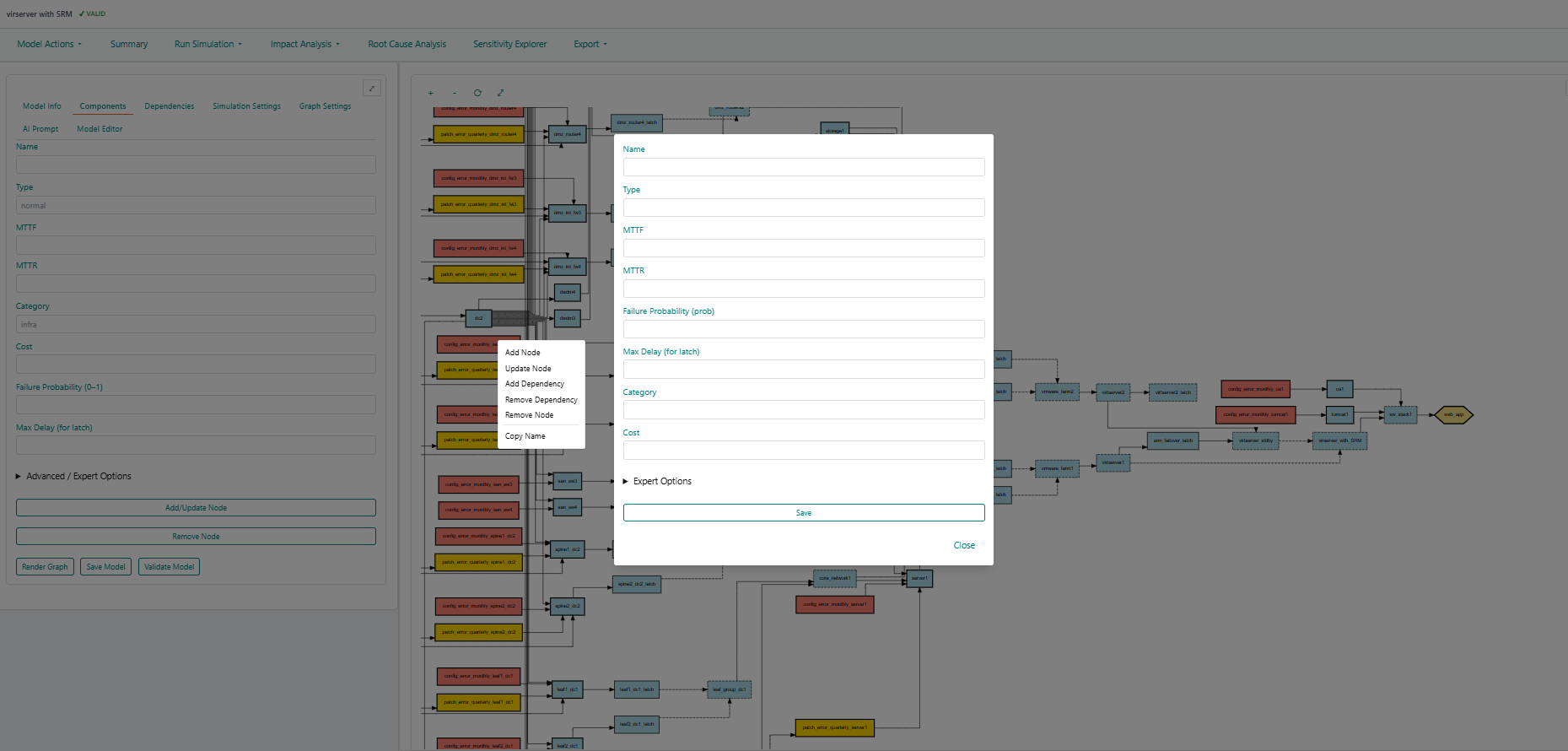
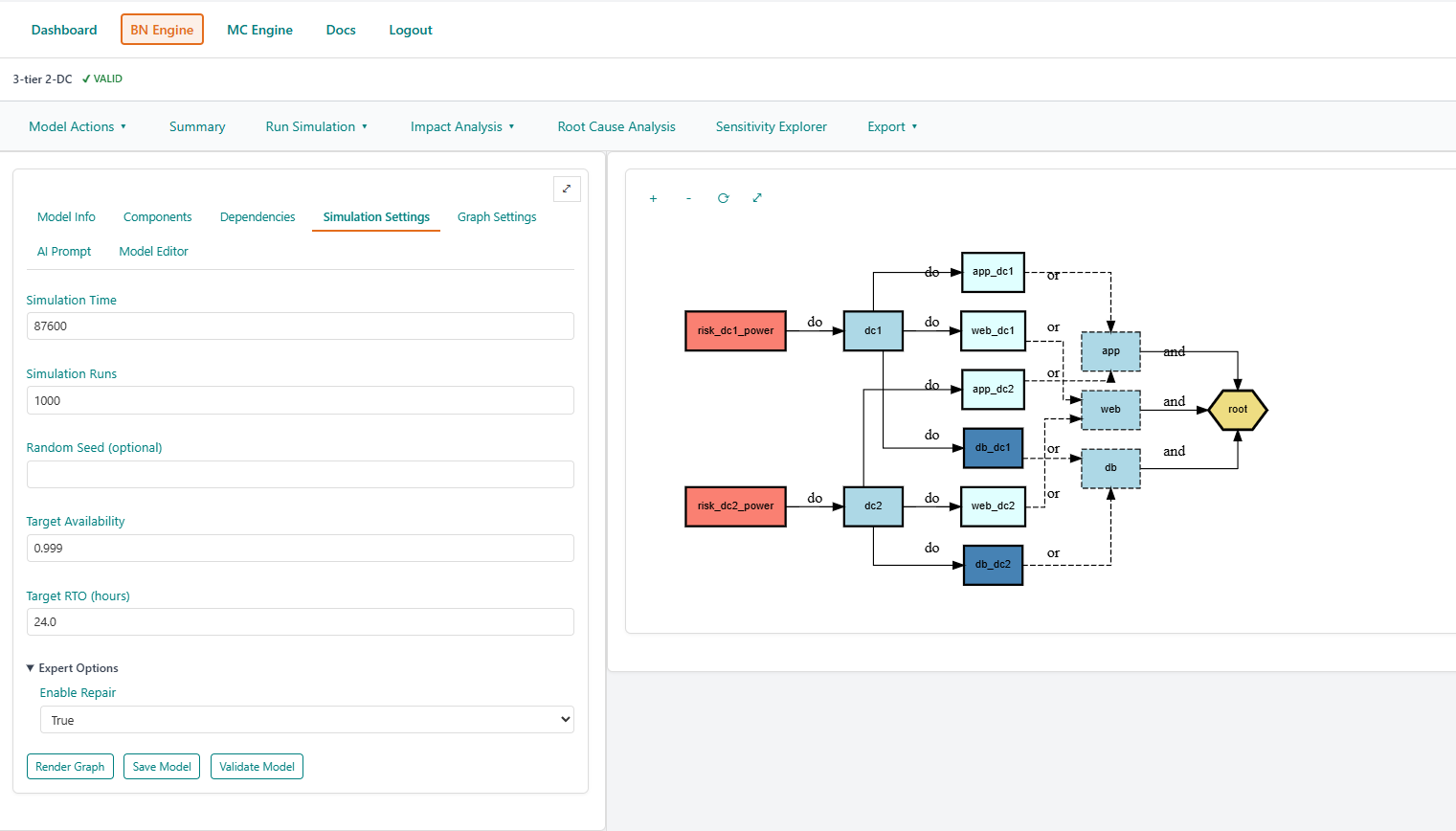
Add, remove, edit nodes, dependencies, and attributes through a forms-based interface that stays in sync with the YAML editor
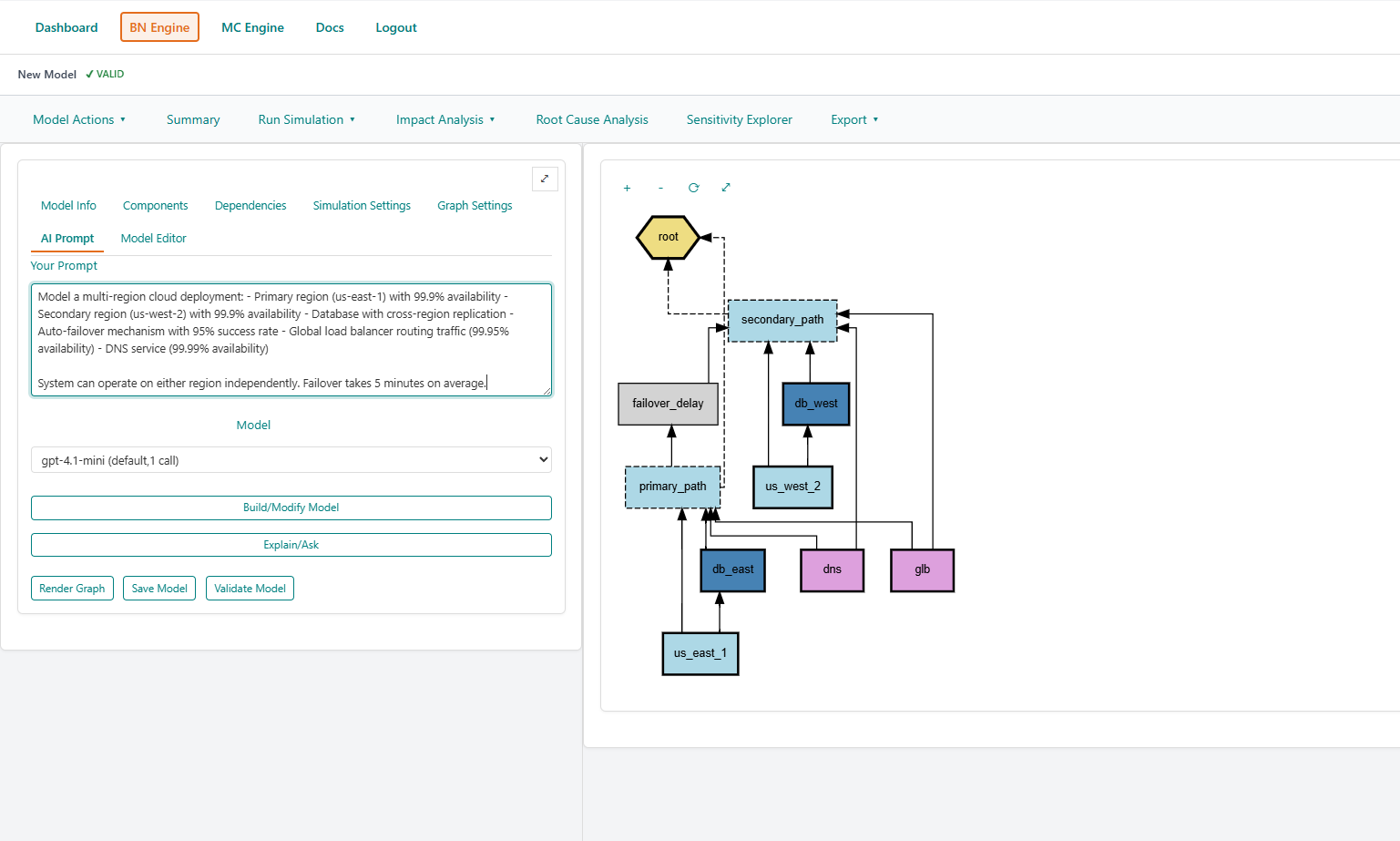
Use the built-in assistant to build, modify, and explain your models or simulation results.
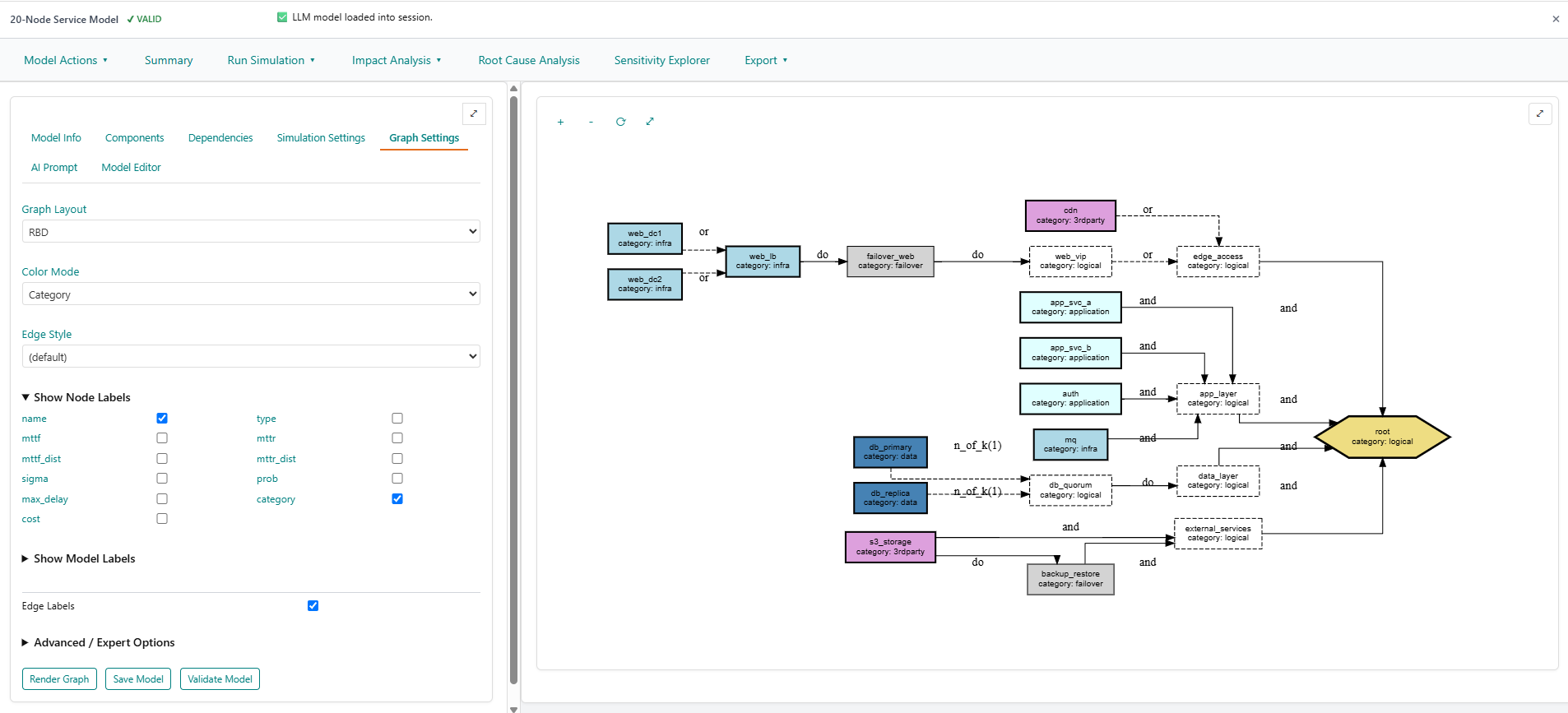
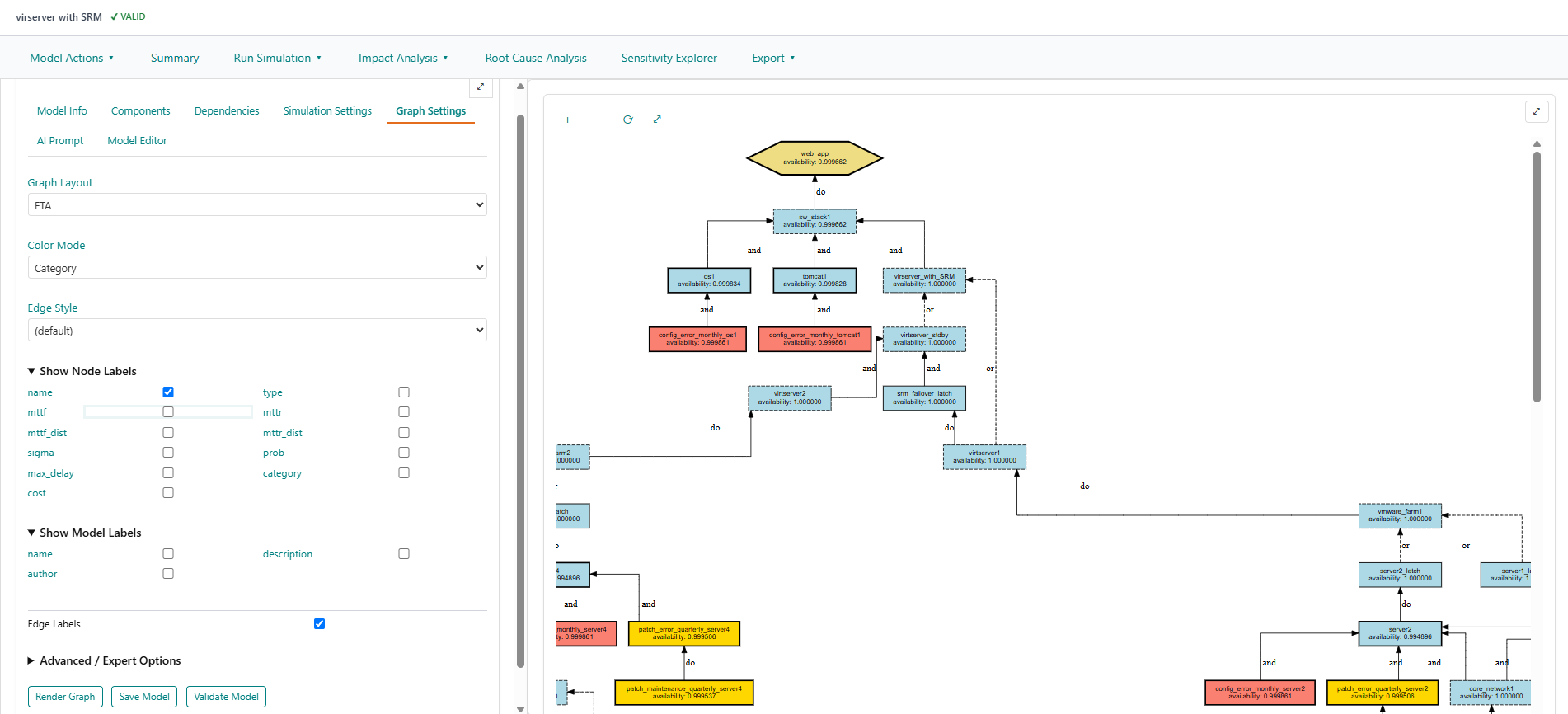
Visualize models as FTA, RBD, or DAG diagrams. Color nodes by category, availability, or impact.
Run probabilistic inference to evaluate system success and failure under uncertainty.
Simulate component failures over time using customizable Monte Carlo runs and simulation horizon.
Model failover delays and timing constraints using probabilistic latch abstractions.
Tag components by risk type: human, automation, disaster, or maintenance.
Switch between availability and reliability modeling modes in both BN and MC engines.
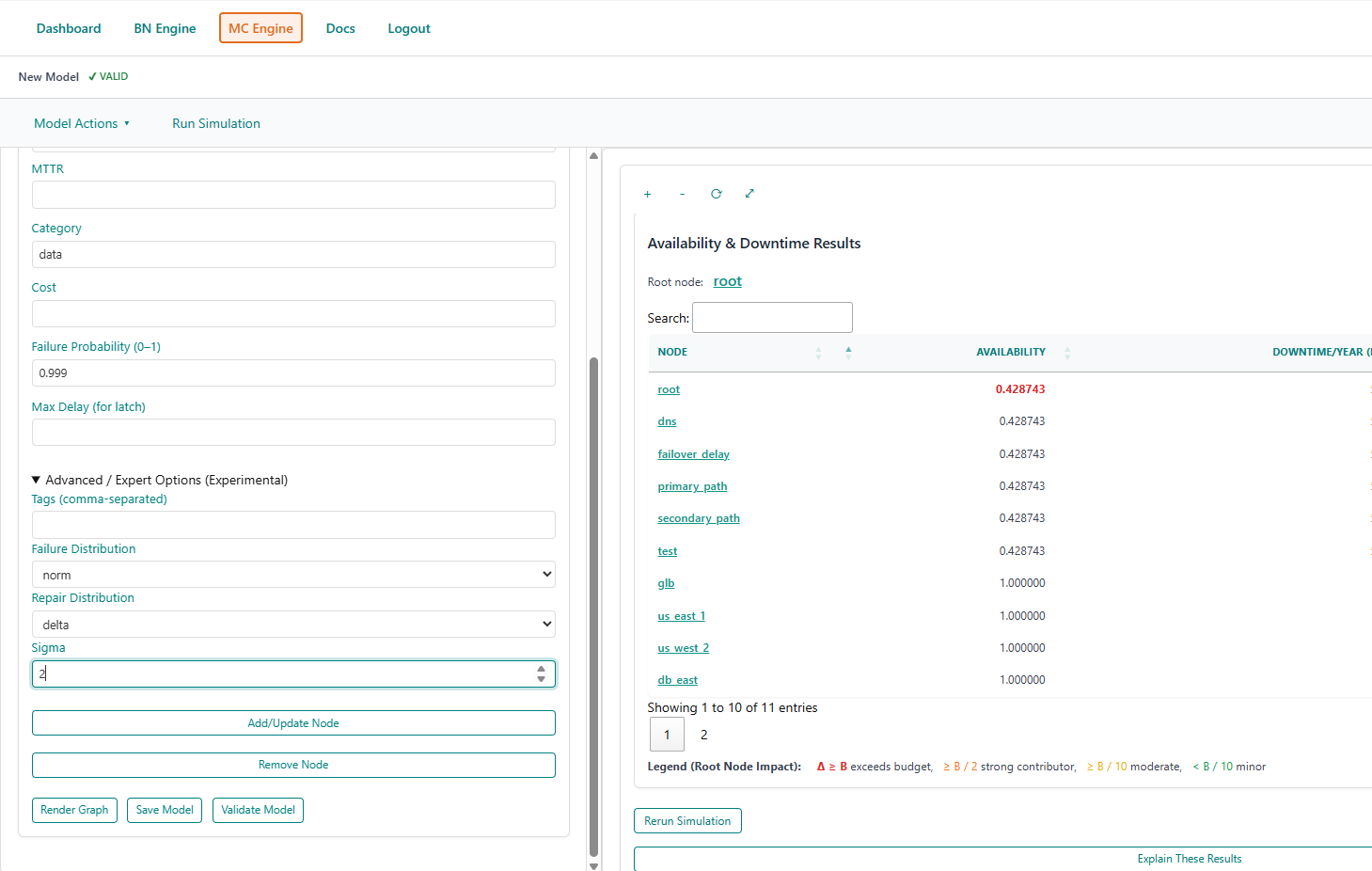
(Experimental feature) Model time-to-failure and repair using delta, exponential, normal, or log-normal distributions.
Latch-X combines causal dependency logic with time/repair semantics. Compared with traditional methods:
| Aspect | Fault Tree | RBD | Markov | Latch-X |
|---|---|---|---|---|
| Logic Domain | Failure logic (top event) | Success paths (series/parallel) | State-based (CTMC/DTMC) | Causal availability/reliability (BN-style) |
| Structure | AND/OR (+ variants in dynamic FTA) | Blocks (series/parallel, k-of-n) | States & transitions | Components + dependency gates: do, and, or, n_of_k + latch nodes |
| Repair Modeling | Not native; via extensions/Markov | Limited; often needs Markov assumptions | Native (per-state rates) | Native per node (MTTF/MTTR or prob) |
| Failover / Delay | Not modeled in classic FTA (sequence via dynamic FTA) | Standby possible; explicit delays are awkward | Modeled via extra states | ✔ Explicit via latch nodes (delay/success) |
| Risk Modeling | Basic events (e.g., human error) but no categories | Not explicit; external inputs | Possible but complex to scale | ✔ Native as components with category: risk & tags |
| Scalability | Visual clutter at scale | Moderate | Poor (state explosion) | ✔ High (declarative text model) |
| Authoring Format | Diagram tools | Diagram tools / spreadsheets | Equations / matrices | ✔ YAML (declarative) |
Notes: Classic FTA/RBD are static; repair and sequence effects generally require dynamic FTA, ABD, or Markov models. In Latch-X, components can use MTTF/MTTR or direct probabilities, latch nodes encode failover delays/success, and models can switch between availability (repairable) and pure reliability (non-repairable). Schema supports per-node dists and risk categories.